3/7/2006

Diet Book Review: The Biggest Loser

By Laura Moncur @ 5:00 am — Filed under:

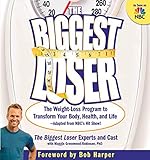
The Biggest Loser: The Weight Loss Program to Transform Your Body, Health, and LifeI wanted to hate The Biggest Loser. The first few episodes that I watched just made me mad at the show and the sponsors because I was under the impression that this television show was created to make fun of fat people. The more I watched it, however, the more I realized that NBC is trying to create a show that proves that dramatic weight loss can be attained through only diet and exercise. No plastic surgery or diet pills, just inexpensive food and lots of movement.

The problem with a simple program like healthy eating and lots of exercise is that you can map it out in about ten pages. What do you do with the rest of the book?

The Biggest Loser is the companion book to the television show. If you want to lose weight like the contestants did on television, the program is all mapped out for you here. How many calories you should eat and which exercises you should do. It’s a total of 184 pages, which is mostly inspirational talk and glossy before and after pictures of the contestants of the two seasons of the Biggest Loser.

What’s good about this book:

I really like the diet plan. It’s a little low on the calories, but if you want to lose weight as dramatically as the contestants did on the show, that’s how low you’ll have to go. The exercises are demonstrated with big pictures explaining the movement in detail. I love Chapter 5: Winning Strategies. It’s a whole chapter of encouraging words and ideas formatted in a visually appealing manner. I would have loved Chapter 5 to be on a poster that I could hang on my wall instead of in the book. It’s that inspiring and packed full of ideas.

What’s not so good about the book:

Chapter 2: Getting Started concentrates on your motivation for losing weight. That is a really important factor in weight loss. Most people don’t succeed unless they have a clear motivation and goal in mind. They start the chapter off with scare tactics, though, mentioning all the diseases that being overweight aggravates. They are very clear to say that excess weight is ASSOCIATED with these diseases instead of saying that it causes them, but still I was disappointed that they started off with the scare tactics.

They were very good about clarifying that you shouldn’t put your life on hold until you lose weight. If your goal is to have better relationships, that involves a lot more than slimming down. Their advice:

“Becoming socially more active or improving intimacy with your spouse should not be delayed until your goal weight is reached. Work on these things now.”

Should I buy this book?

There is nothing here that you won’t find on the Internet. If you are looking for a diet plan, there are enough out there for free. If you were inspired by the television show, however, this book will be a way to keep up the inspiration between seasons. With lots of before and after pictures and scenes from the challenges on the show, it’s very motivating and could be a good addition to your bookshelf.


3/6/2006

Diet Book Review: The Flavor Point Diet

By Laura Moncur @ 5:00 pm — Filed under:

The Flavor Point Diet : The Delicious, Breakthrough Plan to Turn Off Your Hunger and Lose the Weight for GoodI picked up The Flavor Point Diet at the health food store. Somehow I thought it might have a grain of truth in it. The diet is based on the premise that if you limit the amount of flavors in a meal, you’ll feel full faster. The flavors in question are sweet, sour, salty and savory.

What I know for sure:

When I used to binge, I would eat for hours on end. I would constantly eat. How could I do that? Most people get full when they eat for five minutes straight, yet I could eat without stopping for hours. How did I do it?

I would start with whatever I was in the mood for, like potato chips. Once I started getting full of potato chips, I would move on to something sweet, like Reeses Peanut Butter Cups. After I felt full enough of Reeses, then I would change to something salty again like french fries. Sometimes I would even combine them by dipping my Wendy’s french fries into my chocolate Frosty.

I would keep switching from salty to sweet and back to salty and back to sweet until I couldn’t eat another bite. I used to do this on a regular basis and I even had an episode of this over the last Christmas holiday. The only way I could consume a ton of food like that was to switch between flavors.

How does this translate to a diet?

I don’t know. The method that David L. Katz, the author, uses is to limit flavors by day (such as a lemon day) in the first phase. The second phase limits flavors by the meal (Lemon Lunch, Pineapple Dinner) and finally in the third phase, you should be able to limit your flavors as you see fit.

I am really uncomfortable with diets that map out what I should eat for the next six weeks. I prefer the freedom of choosing what I want to eat at the time of the meal. There is no way for me to follow this diet to see if it would work for me because the mere idea of limiting my food to a six week plan sends me heading for a binge. Dr. Katz had a lot of people following this diet, raving about its efficacy and ease, but I can’t be one of those people. I know in theory, it would be good for me to limit the various flavors in my meals, but there is no way I could possibly follow his plan.

What’s good about the diet?

It seems to be nutritionally very sound and the recipes will bring a variety to your diet that you might be missing right now. We tend to fall into ruts when we are eating healthy, and this diet has enough interesting recipes to really shake up your diet plan. If you consider this book just a recipe book, it’s worth the cost all by itself.

What’s wrong with the diet?

I find the paranoid insistence that the food industry is purposely trying to make you fat a little far-fetched. Sure, there is salt in sweet foods. What probably happened is they tested various recipes and the taste tests came back, puzzling the food chemists. I can just imagine them talking to each other, “Can you believe the one they all chose? They like the one with salt in it. Why would they want so much salt in their cookies? It doesn’t make sense.” The other scientist says, “It doesn’t need to make sense. It just needs to taste good.”

The food industry isn’t trying to make people eat more food by adding more flavors. They are trying to make food that tastes good to the largest number of people. That’s their job, to make the tastiest food. The paranoia is an unnecessary scare tactic.

Should I buy this book and follow this diet?

This diet seems nutritionally very sound with plenty of whole grains, lean protein and interesting recipes. If you’re the kind of person who can follow a regimented diet, this one will work for you. Otherwise, this book has some great ideas for new healthy recipes and some ideas to keep bingeing in check.

Diet Book Review Week

By Laura Moncur @ 5:00 am — Filed under:

This week we are reviewing many of the diet books that have shown up on the market recently. There is a lot of hype about all these diets, so I’m here to sift through all those chapters, recipes and pictures of exercise to tell you the nitty gritty about each diet book. Will they be helpful to you? Are they healthy or do they recommend some quacky ideas? All of this will be revealed this week.

Books to be reviewed:

  • The Flavor Point Diet
  • The Biggest Loser with Bob Harper
  • Winng By Losing by Jillian Michaels
  • Eating for IBS
  • Living Cuisine: The Art and Spirit of Raw Foods
  • Curves On The Go
  • Helping Your Child Lose Weight the Healthy Way
  • Weight Watchers: Stop Stuffing Yourself
  • Weight Watchers: Weight Loss That Lasts

If you have been thinking of buying any of these books, wait until this week’s review.

3/5/2006

Use Athletics To Deal With Stress

By Laura Moncur @ 5:00 am — Filed under:

The Olympics provided us with a lot of inspiration for physical activity, here is an inspirational story about a competitor who turned to skiing instead of other ways of dealing with hard times.

AP Photo/Kevin Frayer

United States Olympic skiier, Julia Mancuso, had a childhood that was difficult. Her father was accused of crimes and even spent time in jail. Skiing was Julia’s way of coping with it.

From 1989 until his guilty plea six years later, the family lived under a legal cloud. For Julia, who was on skis by age 2, the sport was her passion and perhaps an escape. She was racing by age 8.

”Looking back now, it’s just times when maybe skiing was the only thing for me to do,” she said. ”I just spent most of my time on the hill with my two sisters, chasing them around.”

Next time you’re tempted to turn to food when you’re having an emotional time, think about Julia Mancuso. Instead of turning to food, she relied on skiing to keep her healthy and help her beyond the stressful times in her life. Find something athletic that you can do to keep you healthy in times of stress.

3/4/2006

Low Blood Sugar

By Laura Moncur @ 5:00 am — Filed under:

I had a low blood sugar incident yesterday and I am still feeling the effects of it. Sometimes I forget that I can be sensitive to sugar. Since I’ve started eating healthy, I’ve had few blood sugar problems, so I kind of forgot that I used to have sensitivity to huge sugary treats.

Ironically, the low blood sugar problems that I used to have on a regular basis weren’t enough to get me to eat healthy. It wasn’t until my stomach started bothering me that I thought I better get my eating under control. After yesterday, that kind of shocks me. Half my day was wasted with a unplanned nap and I still feel a little yucky this morning. I used to live with this on a regular basis and it wasn’t enough for me to start taking care of myself. How did I stand it?

Now that I eat healthy, I usually don’t have to worry about low blood sugar. I have been avoiding simple sugars, so they don’t set me off and I eat protein regularly, so I just don’t have those incidents anymore. Yesterday was set off by an apple and pecan bread pudding with carmel sauce. I had plenty of room for it in my diet, but I guess my body couldn’t handle that much sugar.

I forgot how crappy I used to feel all the time. This has been a vivid reminder of why I eat healthy 90% of the time.

3/3/2006

Wil Wheaton Participated In The Race For The Cure

By Laura Moncur @ 5:00 pm — Filed under:

Just a Geek by Wil WheatonWil Wheaton, actor and writer, participated in this year’s Race For The Cure to benefit breast cancer research. He describes his race in this entry:

It’s surprising to me to see a writer who I have been reading for years talk about running, muscle soreness and not being able to run the entire race, but still completing it. Our different professions mean nothing when we are out on the road running. We are no longer actors, writers or insurance adjusters. Suddenly, we are all athletes.

The Chili Dog Diet

By Laura Moncur @ 5:00 am — Filed under:

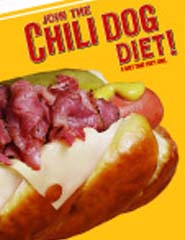
Mike wanted to go to Wienerschnitzel for lunch the other day. When we walked in, all the cups had advertisements for The Chili Dog Diet. I laughed happily to myself. It’s no stranger than any of the other diets I have seen over the last twenty years.

You eat one chili dog in the morning, one at lunch and finish up with two corn dogs and chili cheese fries for dinner. Most importantly, you’re not hungry! They don’t claim to help you lose weight or even pretend that their food is a healthy staple. They are just promoting themselves as a diet.

Our cups said:

Join the Chili Dog Diet!

  • No Guilt
  • No Cravings
  • No Costly Food to Buy
  • A Diet That Isn’t One

I thought the concept was so funny that I was sure they must be promoting it like crazy, but when I went to their website, there was no record of it. I wonder if they were scared to actually have fun with the idea.

Your calorie consumption with the Chili Dog Diet would be as follows:

  • Chili Dog for breakfast: 290 Calories, 13 g of Fat, 1 g Fiber (6.7 WW Points)

  • Chili Dog for lunch: 290 Calories, 13 g of Fat, 1 g Fiber (6.7 WW Points)

  • Two Corn Dogs for dinner: 500 Calories, 34 g Fat, 2 g Fiber (12.4 WW Points)

  • Chili Cheese Fries for dinner: 540 Calories, 38 g Fat, 4 g Fiber (13.2 WW Points)

  • Total: 1620 Calories, 98 g Fat, 8 g Fiber (39 WW Points)

On the surface this looks like it might actually be a good diet because the calories are in the 1200-1800 range, but when you add in the fat from these foods, it’s far from healthy.

The Chili Dog Diet is a good joke, but it’s not an eating plan that will help you lose weight. All it will do is keep you from being hungry.

All calorie counts are provided by:

3/2/2006

Common Threads

By Laura Moncur @ 5:00 pm — Filed under:

This little movie from January of 2005 describes Common Threads, a charity that teaches underprivileged children the art of cooking in Chicago.

They have some very healthy ideas about cooking:

“I don’t think we think enough that the culinary arts are valuable as the rest of our wonderful art world.” – Maggie Daley

“We try to find foods that every culture has and show similarities and not focus on the difference. This simple act of cooking shows the child how we share these common threads.” – Art Smith

Teaching children healthy recipes and a wide variety of foods from other cultures is a great way to enrich their lives. Thumbs up to you, Art Smith!

Weight Training Without A Spotter

By Laura Moncur @ 5:00 am — Filed under:

Complete Idiot's Guide to Body SculptingWhen I realized that we were going to have a home gym with free weights, I kind of panicked. If there was one thing that I learned in my weight training class, it was never lift weights without a spotter. That fear eventually was updated to never lift weights over your head without a spotter when I realized that some exercises are completely safe to do alone. Which are which, though?

I got The Complete Idiot’s Guide to Body Sculpting for just that reason. Each exercise has detailed lists for Preparation, Movement and Precautions. Here are the precautions from the Bench Press:

“Do not do this exercise without a spotter. It may seem funny on TV when someone gets stuck under a bar, but you definitely won’t be laughing if it happens to you.”

“Do not let the bar ‘bounce’ off your chest. Some competetive lifters do this to get the bar moving upward, but it is really dangerous. Your chest is not a trampoline.”

“Keep your back flat on the bench. Arching your back while pushing the bar up can strain your lower back muscles and cause injury.”

Fortunately, there are MANY exercises that don’t need a spotter, so if you are a lone weight trainer, you can tailor a workout for you that will make you strong and keep you safe.

3/1/2006

CocoaVia: Don’t Believe The Hype

By Laura Moncur @ 5:00 pm — Filed under:

Mars Candy Company is trying to sell you a chocolate bar and tell you it’s healthy and will even “promote a healthy heart.”

They say that they “believe” it will increase blood flow, but they have no proof:

”We believe … there can be a significant benefit around blood pressure, but we have not conclusively proven that,” said Mars’ chief scientist Harold Schmitz.

Make them prove it with peer reviewed, double-blind tests before you shell out one penny for their over-priced candy bars. Until they are able to prove it, they are still just selling junk food.

« Previous Page« Previous Entries - Next Entries »Next Page »

Powered by WordPress
(c) 2004-2017 Starling Fitness / Michael and Laura Moncur