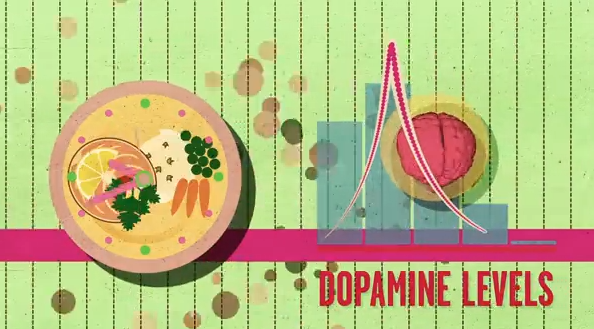
 I don’t know about other people who are overweight, but the reason I overate was because it made me FEEL good. It gave me a high. More specifically, it gave me a dopamine surge every time I binged.
Now, eating a healthy diet can get tedious. Unless I am careful, I will get bored of my food and routines. I need to keep my levels of dopamine high without bingeing. Learning how to do that has been difficult for me, but here are a few things I’ve learned.
Change My Food Regularly
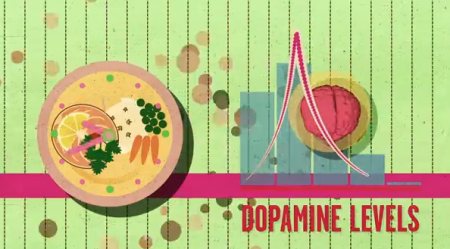 As I learned in How Sugar Affects The Brain, a healthy meal will give me a boost of dopamine. Not as good as sugar, but pleasurable nonetheless. If I KEEP eating that same meal every day, however, I won’t get that same dopamine rush as I did before.
So, I have to keep changing my daily meals. About every two weeks, I choose something completely different for my snacks, breakfasts and lunches so that I don’t get mind-numbingly bored of my food.
Run Like My Life Depends On It, Every Once And A While
 I’ve talked about this idea before. If you do a workout where you feel as if your life depended on it, you get a surge of feel good hormones.
The only problem is if you do this kind of workout every day. Your brain will get bored and used to being chased by dogs, zombies or punching out the scruffy-looking Mii on your boxing game. You have to use these workouts sparingly or they won’t give you those feel-good chemicals.
Eat Foods With The Good Stuff
 There are foods that make your brain more sensitive to the smaller amounts of dopamine that you will be giving it, so you want to load up on them.
- Tyrosine: Your body needs it to make dopamine and you get it from meat, dairy, legumes, avocados, bananas and almonds.
- Beta-carotene: Prevents dopamine from oxidizing and you get it from fruits and veggies that are dark green and orange.
- Vitamin E: Also prevents dopamine from oxidizing and you get it from nuts, cruciferous vegetables (like cabbage, Brussels sprouts and cauliflower) and carrots.
- Vitamin C: Another anti-oxidant that helps dopamine stay “fresh” and you get it from citrus fruits, strawberries and cruciferous vegetables (like cabbage, Brussels sprouts and cauliflower).
Also, avoiding binge foods keeps your brain from becoming numb to dopamine. Whatever food is your drug, avoid it.
Set Tiny, Obtainable Goals and Achieve Them Every Day
 Benjamin Franklin worked on this technique and it’s the whole idea behind the Franklin Covey planners. This year, I bought myself a planner and just listing the tiny and seemingly inconsequential things I do every day has brought great joy. I can write more than one entry a day, but setting my goal low gives me the feel-good chemicals I need. I actually read for fun, but putting it on the list forces me to take time for myself. Set a goal, no matter how easy it seems and achieve it. You’ll get a chemical reward from your own physiology.
I Get Plenty of Sleep
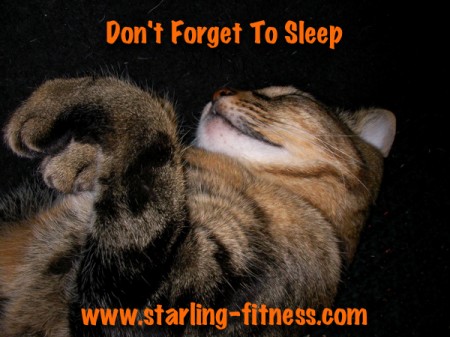 Your brain needs to recharge. I talked about this before here:
When I am exercising hard, eating less calories and working on the emotional reasons I want to binge, I NEED extra sleep. This is HARD work and my body needs that extra time to recharge my dopamine levels.
I Listen To Some Good Tunes
 There have been scientific studies that listening to music that is pleasurable to the subject lights up the pleasure centers in the brain. Whatever music makes me happy, I listen to it. As Oliver Wendell Holmes said:
Take a music bath once or twice a week for a few seasons, and you will find that it is to the soul what the water bath is to the body.
When I give myself time to just enjoy music, I get a dopamine high without the calories. My biggest problem is not letting myself just sit and enjoy music. Sometimes I have to put it on my to-do list just so I can get that benefit.
I Meditate
 I spend 15 minutes every day meditating. The longer I do it, the better I am at making those feelings of peace and transcendence come. If you have the luxury of believing in God, make sure you take time EVERY day to pray and talk to that all-powerful being. If you are an atheist like me, you can still access those good feelings. I just access that part of my mind that lets me feel “The Other.” It was hard to do at first, but with practice, I am able to get a small dopamine rush that has started to rival my favorite binge foods.
Update 12-18-14: I’ve written a meditation book for atheists that you can see here: Twelve Step Meditations for Atheists by Laura M. at Amazon.com
What Else Is There?
There actually is a huge list of ways to get a good dopamine high without food:
- Read a good book
- Get a manicure and pedicure
- Get a massage
- Take my dog for a walk
- Snuggle with my cat
- Have some great sex
- Call a friend on the phone
- Enjoy time with my family
- Watch a funny or romantic movie
- Organize something in my house
- Clean up some clutter
- Do some crafty thing like crochet or going crazy with my hot glue gun
- Read a magazine
- Play a video game
- Write in my journal
- Take pretty pictures
- Sit on the heat vent with a blanket over my legs
- Take a warm bath
- Color in a coloring book
- Do some yard work
- Lay out in the sun
- Go to a thrift shop and look for strange treasures
- Draw pictures
- Write letters, email or texts to friends
What have I missed? What do you do to make yourself feel better without bingeing? The next time you are tempted to overeat, return to this page and start doing something ELSE to make your dopamine centers light up. You don’t have to overeat. It may be the simplest way to get that sort of reward, but it is also damaging to your body. Find another way to make yourself feel good.
Brain image via: Studio3Music – The #1 Kindermusik Studio | Music is as Enjoyable as Sex « Studio3Music – The #1 Kindermusik Studio
 Buy Walking Videos
 I was happy to see this article in U.S. News & World Report: